

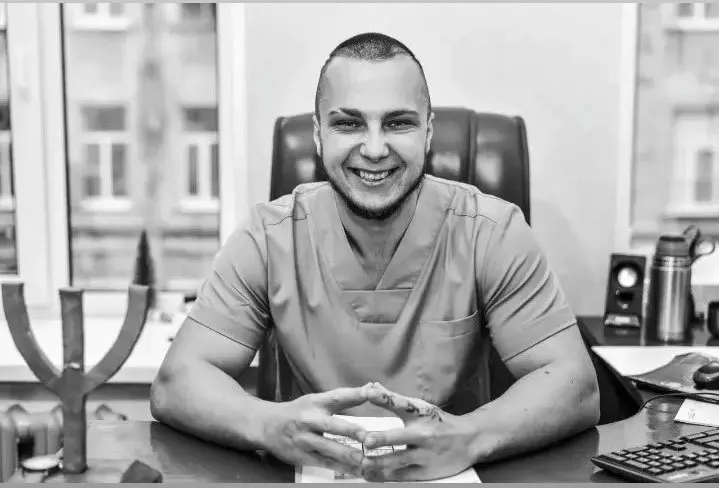
On Psychotherapy, Science, and Life
“Anyone who wants to understand the human psyche will learn almost nothing about it from experimental psychology. They would do better to leave the exact sciences, remove the academic gown, bid farewell to study, and wander the world with a human heart: through the horrors of prisons, asylums, and hospitals; gloomy suburban taverns, brothels and gambling houses; elegant salons, stock exchanges, socialist rallies, churches, revivalist meetings, and ecstatic sects; through love and hatred, and through passion in every form within their own body. There they will reap a richer harvest of knowledge than a foot-thick textbook can give, and will know how to treat the sick with genuine understanding of the human soul.” (C. G. Jung) [2] 📚
Yet knowledge of life is not enough: theory and education matter too
“Non- and quasi-scientific forms of knowledge—popular and parapsychology—have joined the struggle for the enormous social demand in psychology, widely and unlawfully using the brand of psychological science to promote their product” (I. A. Mironenko, p. 137) 📚. So lived experience is not enough; education, command of concepts, and more are also required.
Because of its subject, psychology must study people not only in the laboratory but in real life. It must visit every corner of a “restless Gotham”: understand both the sex worker and the saint, begin a conversation, and enter the worlds of the businessperson and the unhoused person. In such a vast field, science and education provide orientation and a system of values, while scientific knowledge shows the boundaries of adequate understanding. In the author’s formulation, the difference between an academically trained psychologist and someone without higher education is that the latter may try everything. A person grounded in science has a “God,” and that God is Logos. James Hollis recalls Dostoevsky’s nineteenth-century warning that without God, anything at all becomes possible.
You can see the problem on classified-ad sites: people there promise to treat everything—anything at all; listeners for an hour, leaders for a moment. At the psychology department, a cake with candles burns in their memory. 😄
But as Stalin once said, “If you criticize, propose an alternative.” So here is mine:
A therapist’s professionalism is not limited to knowledge of theory and science. It must include practice—knowledge of what is different. Boris Ananyev also observed that a person as a subject is characterized not only by traits but by knowledge, skills, and the technical means of labor (I. A. Mironenko, p. 76). A therapist is first of all a human being, and the principal “instrument” is that person’s character. Character develops through questioning. Here are a few such questions:
Ask yourself now: “How have you lived until today?
What kind of hero were you? What places did you inhabit?
Which way did the scales of good and evil tip?
What did you do on this earth? Were you a traveler and a warrior?
Or was your miserable body worth nothing at all?” [3]
“Rus’, where are you rushing; who is to blame and what is to be done? 🇷🇺
Am I a trembling creature, or do I have the right? 🌓
What are our boys made of? ⚡
Why do the birches rustle so in Russia? 🌳
Why did the islanders eat Captain Cook? 👹
Do you sell a Slavic wardrobe? 🔦
Who are we, and where are we from? 🎎
Who needs a slice of July sky? 🌦
Why can’t people fly? 🦅
Truth or dare? 🎭
Where are your seventeen years? 🎷
Where does childhood go? 👫
Is there life on Mars? 🌐
What are we to do in Greece? 🌅
What does the coming day prepare for me? 📅
How much does your freedom cost? 🔕
Where does the Motherland begin? 🎖
Your money or your life? 💰
What is the price of opium for the people? 💉
Is anybody alive? 🙏
Halt, who goes there? 😑
What is strength, brother? 😎
How much do your clothes cost? 🤠
How much do you earn? 🤑
How many centimeters? 🤥
What? Where? When? 📺
Who Wants to Be a Millionaire? 🎬
Where is that street, where is that house? 🏦
Where are the best parties? 🎢
Who wants seconds? 🍳
How many grams should I weigh out? 💊
Where are the police looking? 👮♂
Who let the dogs out? 🐕
Whom do you love more—your mother or your father? ✉
What is love? ❤
What Dreams May Come? 💫
What is there in my name for you? 👥
Who, if not us? 🔱
They Shoot Horses, Don’t They?” 🔫 [4]
But above all: What is psychology for? ❓
.............
Sources
- I. A. Mironenko, The Biosocial Problem and the Formation of Global Psychology. Moscow: Institute of Psychology, Russian Academy of Sciences, 2019. 406 pp.
- James Hollis, Living Between Worlds: Finding Personal Resilience in Changing Times. LitRes, 2022.
- Grot, “The Beginning of Light.”
- Oxxxymiron, “Who Killed Mark?”
The topic is explored in more detail in the YouTube interview “On Psychotherapy, Science, and Life”.
Questions about this article
01Why does a psychotherapist need both lived experience and scientific education?
Lived experience reveals the diversity of the human psyche beyond the laboratory, while science supplies concepts, orientation, and awareness of the limits of reliable knowledge. Professionalism joins both sides.
02How does scientific training support a therapist’s professional boundaries?
It provides a frame of reference, distinguishes grounded methods from promises to “treat everything,” and helps practitioners understand the limits of their competence and knowledge.
03What does the author call the therapist’s principal instrument?
The therapist’s own personal qualities. Knowledge, skills, and tools are necessary, but asking difficult questions about one’s life shapes how that knowledge is put into practice.
04What central question does the essay leave open?
After a long sequence of cultural and personal questions, the author returns to the central one: “What is psychology for?” The conversation continues in the linked video interview.