
Anton Kolhonen
Founder of DETai and author of the DET method
Defines the DETai research framework and aligns psychological practice with AI architecture.
This page introduces the people building DETai, the founding vision for the ecosystem, its participation principles, and the path into the team. Here, the concept becomes distributed work across the method, research, psychotherapy, education, technology, and products.
DETai is developed by a team. The founder holds the original vision, methodological concept, and strategic horizon; participants take responsibility for the technological, research, institutional, product, and management domains.
Founder of DETai and author of the DET method
Defines the DETai research framework and aligns psychological practice with AI architecture.
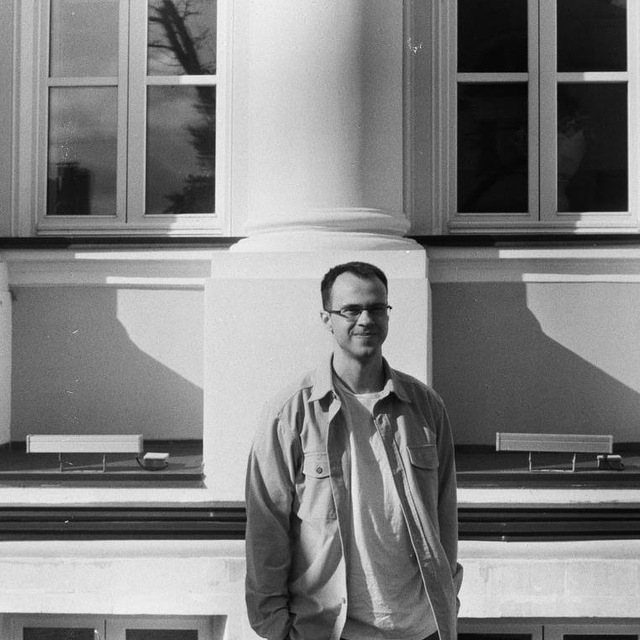
Onboarding & Team Operations Coordinator
Helps new contributors join the DETai working environment, develops team processes, and contributes to practical improvements of the ecosystem's internal systems.
We are building DETai as an ecosystem for psychotherapy in the 21st century, centred on the development of the independent DET method, whose institutional layer is complemented by its own technology layer and a managed feedback loop.
Psychotherapeutic practice, education, and research work here alongside Platform DETai and the U.L.I. environment—not as separate projects, but as parts of one architecture.
In this future:
1) Psychotherapists use intelligent tools as a controlled extension of the method while retaining professional responsibility.
2) The institutional and technology layers exchange knowledge through practice, research, products, and data.
3) Technology serves the human being by strengthening contact, thinking and practice rather than replacing them.
A person encountering the ecosystem should receive not the promise of a technological miracle, but a more coherent path of support and development. A practitioner gains an augmentation of practice; a researcher, new questions and data; a creator, a clear purpose for technology.
Our strategic horizon is ambitious: to turn AI-augmented psychotherapy from a collection of isolated tools into a reproducible principle for developing a psychotherapeutic method.
We are building DETai as an ecosystem for psychotherapy in the 21st century, centred on the development of the independent DET method, whose institutional layer is complemented by its own technology layer and a managed feedback loop.
Psychotherapeutic practice, education, and research work here alongside Platform DETai and the U.L.I. environment—not as separate projects, but as parts of one architecture.
In this future:
1) Psychotherapists use intelligent tools as a controlled extension of the method while retaining professional responsibility.
2) The institutional and technology layers exchange knowledge through practice, research, products, and data.
3) Technology serves the human being by strengthening contact, thinking and practice rather than replacing them.
A person encountering the ecosystem should receive not the promise of a technological miracle, but a more coherent path of support and development. A practitioner gains an augmentation of practice; a researcher, new questions and data; a creator, a clear purpose for technology.
Our strategic horizon is ambitious: to turn AI-augmented psychotherapy from a collection of isolated tools into a reproducible principle for developing a psychotherapeutic method.
Vision gives direction, but development needs structure: first a strategic course, then levels of responsibility, then tools that turn decisions into a living work process.
First, vision becomes a shared course.
The DETai ecosystem develops from its mission, values, founding concept, and the observable state of practice, research, the team, and products.
Governance maintains long-term boundaries and authority, while Management translates the strategic course into priorities, accountable owners, and measurable work cycles.
Then strategy is distributed across levels of responsibility.
Once the course is chosen, work is distributed not only by level, but also across institutional, technological, product, research, and operational domains.
Every decision needs a clear owner, scope of authority, coordination method, and escalation path. U.L.I. supports technical development but does not replace governance of the ecosystem as a whole.
After that, the levels receive an operational stack.
To turn architecture into action, the team uses tasks, code, design, documentation, AI assistants, automations, and communication channels.
These tools form an operational stack, but they are not the governance model itself: decisions and responsibility remain with people and defined roles.
This is the team’s operational stack: the tools through which decisions become tasks, code, designs, documents, communications, and publications. The complete Governance and Management model is described in the knowledge base; the tools merely support it.

GPT
AI reasoning layer

ClickUp
Tasks and production cycles
Codex
Agentic development

GitHub
Code and review

Linear
Issue design

VS Code
Local workspace

Make
Automation layer

Airtable
Structured data

Telegram Bots
Operator interfaces

MkDocs
Knowledge base
GPT
AI reasoning layer
ClickUp
Tasks and production cycles
Codex
Agentic development
GitHub
Code and review
Linear
Issue design
VS Code
Local workspace
Make
Automation layer
Airtable
Structured data
Telegram Bots
Operator interfaces
MkDocs
Knowledge base
The DETai ecosystem is more than a concept, structure, and products.
It is a space of shared responsibility where participation begins with an inner choice and becomes a visible contribution.
Participation is not forced from outside. It begins with a personal impulse: the desire to develop, build and expand the horizons of psychology and technology.
The full version of the principles and their expanded explanation are introduced during onboarding.
The full entry route is described on a separate page: stages, roles, participation principles and the current application status.
team entry runs in cycles; the process is scheduled to begin in October 2026.