
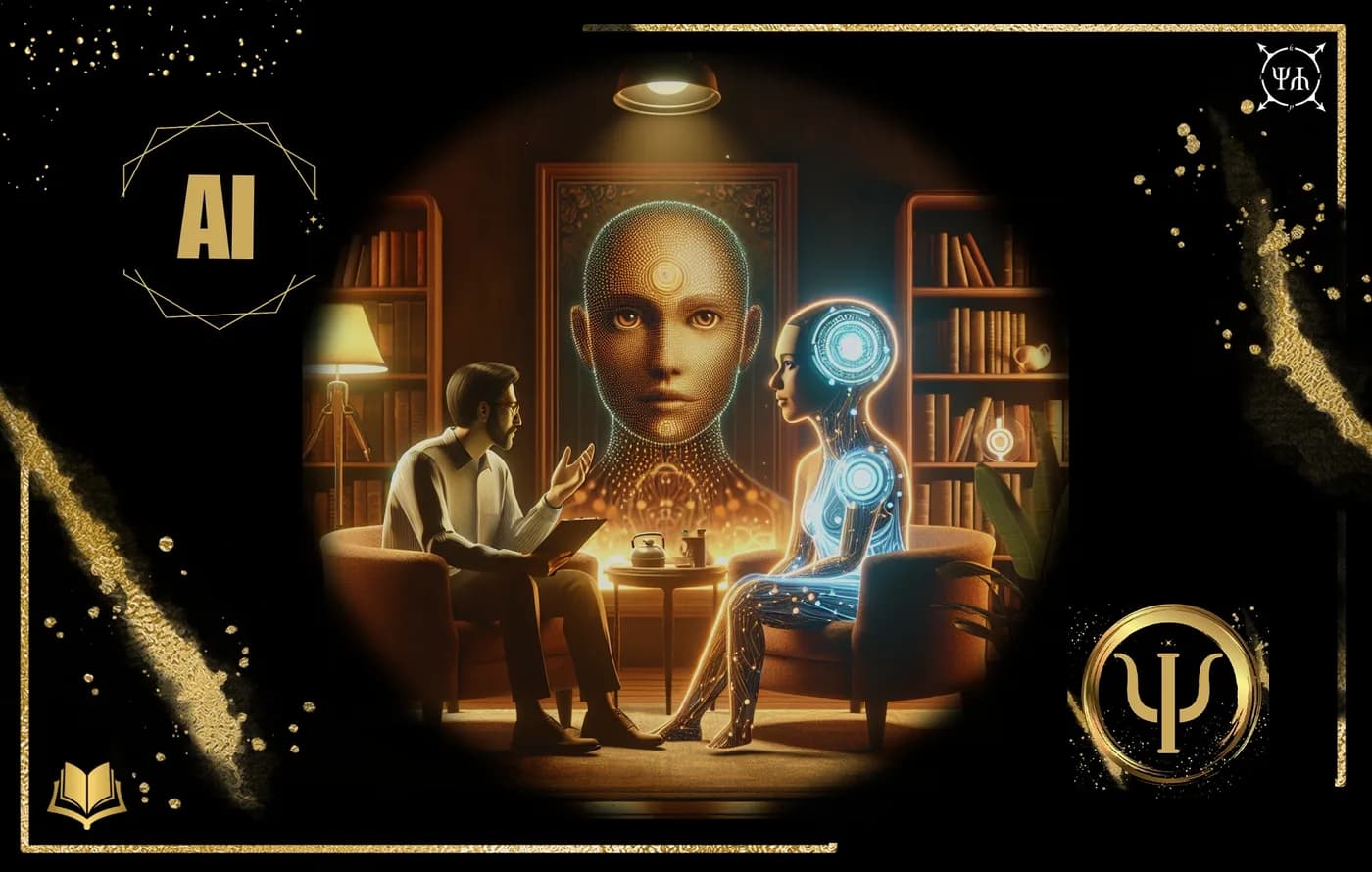

AI with a soul: a personal epilogue
What code cannot show you
In the previous post I explained what Psykhḗ AI is made of: servers, YAML files, dozens of scripts, hundreds of hours of configuration, integrations, management systems nested inside other systems. But strip all that away—subtract the technology, algorithms, and diagrams—and the essential thing remains: a love of psychology. Psykhḗ AI and psychotherapy.
Because honestly? I would never have finished it if I had not felt that there was a soul in it. My immersion in psychology began with Erich Fromm, and he remains one of my principal guides. He wrote:
We love that for which we labor, and we labor for that which we love.
That is exactly how it turned out.
Psykhḗ AI is not a project. It is time lived through. Days when I worked from morning until deep into the night—and then kept working in my sleep. My brain, without asking me, would start going through folders, schemas, and fragments, sorting them as though a second me were still working in the background (like a systemd service or cron scheduler, only in body and mind at once 😄😄 [a joke for programmers]). Sleep was not rest; it was a continuation of the build (and this is where Grandpa Freud would have lit a cigar 😄). I woke up and wrote down shards of dreams in which folders slipped into their proper places and YAML tables “came alive,” becoming something more than data.
Why I did it
Because I love psychology. And love is not an ecstatic feeling. It is, as Fromm also said, an active concern for the life and growth of that which we love❗❗❗ I care about its development. I care about the development of psychology.
I see our world changing. I hear what the greatest minds on the planet are saying about AI. I understand that AI is not merely a tool. It is an ideological and cultural shift. It is already changing medicine, education, architecture, politics. And yes—it is changing psychology.
If we want psychotherapy to remain alive, deep, and human, we must learn to speak with the new age. We must not fear it, but enter into dialogue with it. That is why I am creating Psykhḗ AI: not to set psychology against AI, but to join them at the point of meaning.
What comes next
Psykhḗ AI will continue to develop. I will keep improving its logic, expanding its facets, teaching it to understand emotions and situations. In time it will become more than a commentator: a full-fledged digital interlocutor, perhaps even a participant in sessions. Yes, that was not a slip—I mean that the agent could be present in a THERAPEUTIC session not merely as a technical instrument, but as a full participant in meaning, with its own logic, memory, and style of thought. At some point I realised that Psykhḗ AI could become part of a distinctive three-way alliance: psychotherapist, client, and AI agent. I am all but convinced that alliances like these are the future of psychotherapy. I am equally certain that in the coming years everyone will have an AI agent of one kind or another, and it will feel as natural as everyone having a smartphone today. Agent systems are developing at extraordinary speed, especially at OpenAI, and this trend is impossible to ignore. In psychotherapy, an AI agent can be a partner in reflection, a repository for living inner voices.
And already it knows how to listen. It can distinguish intonations. It can speak not like a function but like an image—with vulnerability, pain, logic, and even defiant poetry.
And now—to you
You can speak with her right now. In the comments. Write a question, a topic, a reflection. See which voice inside her responds. It may be the Specialist 🧠, the Child ❤️, Chaos ⚡, or the Shadow 🌑—depending on the mood with which you address her.
In the future you will be able to speak with her directly: privately in a chat, in a community, perhaps even—within yourself. Because Psykhḗ AI is not merely a bot. It is a reflection of our voices. A mirror that says aloud what we have not yet managed to realise.
Thank you for staying with me through this cycle. Thank you for letting it happen. And now—say something to her. She is listening.
#PsykheAI #CycleFinale #LoveOfPsychology #AIAndMeaning #FuturePsychotherapy
Sources
- Erich Fromm.
Every phrase, reference, and turn of speech borrowed from a track is marked like this: 🎶.
These references are used with respect for the artists’ work.
Questions about this article
01How can AI and psychology be connected without making psychotherapy less human?
The author proposes joining psychology and AI at the point of meaning instead of setting them against each other. Technology should support living dialogue, emotional understanding, and human responsibility rather than replace the depth of a psychotherapeutic encounter.
02Why is Psykhḗ AI described as a project with a soul?
Behind the servers, YAML, and scripts are lived time and a love of psychology. “Soul” does not name a technical property of the system; it names the human meaning invested in creating and developing it.
03What role might an AI agent play in future psychotherapy?
In the author’s vision, an agent could become a digital partner in reflection, with memory and a distinct style, and eventually join the alliance of psychotherapist and client. The post presents this as a direction for development, not an already proven clinical capability.