

Limits of the Possible
How effort, meaning, and a chosen path combine into a better version of life.
A day worth remembering
Diligence, improvement, and experience do not automatically turn a person into “someone.” They do, however, open possibilities that simply would not exist without practice.
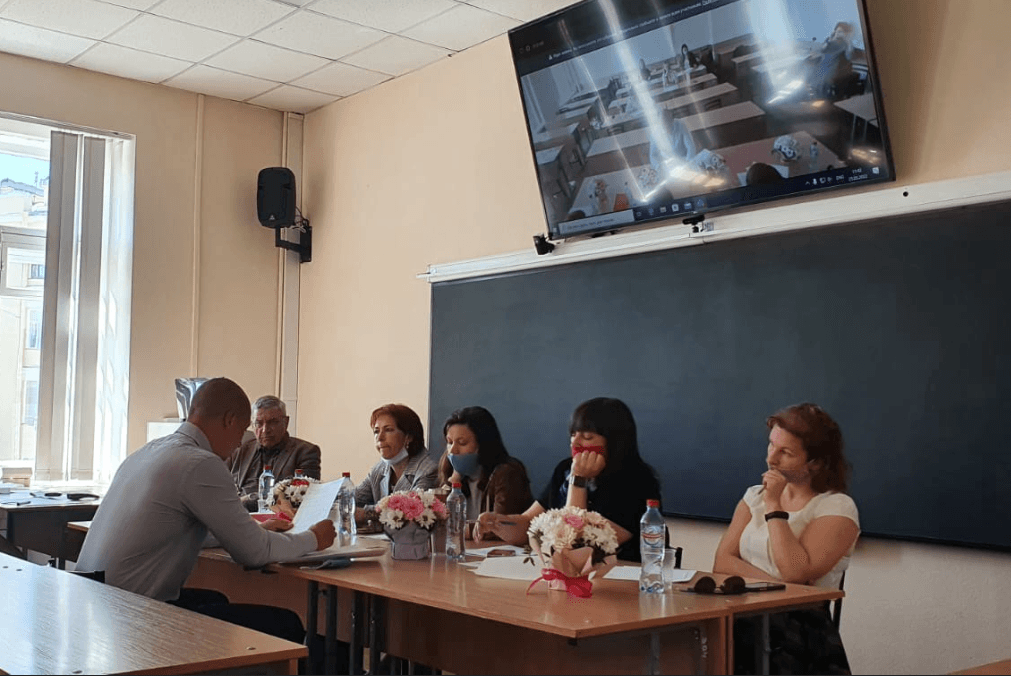
Today I took a final examination in sports psychology and demonstrated the knowledge accumulated over my master's studies. When a course of education ends, it is easy to look only at the grade or diploma. Something else matters more to me: a vast amount of material that I have read, discussed, and tested can now become a foundation for professional work.
Many other processes work in the same way. You begin something. It succeeds for the first time. Confidence grows, experience accumulates, and the next task no longer appears inaccessible. One success does not guarantee another, but it changes the set of actions you are willing to attempt.
Let chosen work become a reason to get up in the morning—not for endless busyness or for the appearance of seriousness, but because you genuinely want to see how far this path can lead.
It is Tuesday, ten in the evening. Behind me are ten hours of study, an answer to a randomly selected examination question before the committee, and the highest grade.
Meaning does not cancel conditions—but it gives direction
While answering a question about human abilities, I remembered a sentence Viktor Frankl cites in Man's Search for Meaning: a person with a “why” can bear almost any “how.”
The attribution matters. The aphorism is Friedrich Nietzsche's; Frankl quotes it and places it in the context of a search for meaning under extreme conditions. Popular culture often credits Frankl because his book made the line widely known.
The idea does not mean that meaning alone is enough for every result, or that suffering should be deliberately created. Ability, health, social conditions, support, and chance all matter. Meaning does not abolish reality; it helps us choose a direction within it and return to action after difficulty.
Later that same day, there was a philosophy conference. I presented my idea, “A Typology of Personalities in the Context of the Dualism of Being,” listened to dozens of papers, and discussed current philosophical questions with colleagues until nine in the evening.
Now I want to publish this note and go to sleep so that I can get up tomorrow and continue. Sleep is not a retreat from the path; it is part of it.
The cumulative effect of a day
A good day is not necessarily one that leaves you completely depleted. Better if, by evening, you have become a little stronger: understood an idea, practiced a skill, endured a difficult conversation, trained the body, or allowed it to recover.
Such days become weeks and months. Gradually, words begin to mean something because repeated actions stand behind them. Responsibility stops being a sound and becomes a reputation—first with yourself, then within a team.
Think about looking back at this day in ten years. The outcome will not have been determined by one heroic night, but by thousands of decisions: what to study, whom to work with, what to give up, where to ask for help, and when to change course.
The phrase “find work you love and you will never work” is too smooth. Beloved work is also tiring, contains routine, and requires boundaries. But it changes the quality of the question. Instead of “How can I force myself?” other questions appear:
How far can I go?
What does my own maximum—not someone else's—look like?
Doors of opportunity do open, but not always on time or equally for everyone. Do what is available in your part of the world: study, seek feedback, show your work, and develop the ability to present it. Years later, these may be the days that return as pride.
A test of time
I am leaving myself a concrete point of return: on May 25, 2032, I will open this post again and see what has endured for ten years.
Not only the list of achievements. I want to know whether the meaning survived, whether the path widened, and whether I learned not to confuse discipline with self-punishment or confidence with loudness.
The original note ended with Oxxxymiron's track “We Will All Die”. Its ironic admission that “positive motivation isn't my forte” 🎶 gives the day's pathos a useful counterweight. A motivational text need not pretend that mortality, doubt, and fatigue have disappeared. On the contrary, the limits of time give choices their weight.
A professional mythology must also withstand competition. If psychology speaks to people only in dry academic language, louder and often less responsible voices will take its place. The skill of self-presentation is therefore not empty vanity; it is the ability to bring substantial work to those who need it.
If a boy from a village was able to study in a strong psychology faculty, that does not prove that “anyone can do it” under any circumstances. It proves something else: a starting point does not have to determine the finish forever.
The limit of the possible is rarely visible in advance. Sometimes there is only one way to find it: move toward it deliberately, day after day.
Phrases and references borrowed from songs are marked with 🎶. These references are used with respect for the artists' work.
Questions about this article
01How can daily effort expand the limits of what is possible?
Repeated, meaningful practice accumulates knowledge, experience, and confidence, allowing a person to attempt more complex work over time. It does not guarantee results: conditions, feedback, rest, and course correction matter, but consistency expands the space of real possibilities.
02Who originated the aphorism about the “why” and the “how”?
The aphorism that a person with a “why” can bear almost any “how” is by Friedrich Nietzsche. Viktor Frankl quoted it in Man's Search for Meaning and connected it with the search for meaning, which is why the line is often misattributed to Frankl himself.
03Does the essay advocate working constantly without rest?
No. The original note conveys elation after an intense day of study, but sustainable growth requires sleep, recovery, and realistic boundaries. Discipline means returning to chosen work, not proving one's worth through exhaustion.