
Nietzsche and Faith: Stage or Trick?
I don’t think Nietzsche was an atheist, because even if we take his symbolic phrase "God is dead", it indicates that he acknowledged this symbol. Nietzsche and faith: faith in God for him is a stage that needs to be passed, not a stage that should be avoided.
…could a person without a religious school, without this preparation, ever learn to experience an insatiable need within themselves…? (The Merry Science, p. 222)
…We (Europeans) owe our wealth to the fact that we grew out of Christianity… (ibid., p. 327)
He believed that this stage must be overcome by shedding excesses that weigh one down and prevent ascent. Excesses embedded in the morality of "Good and Evil".
❇️ HUMANITY AND ITS TRANSITIONAL STAGES ❇️
And this is inevitable, because moving forward, the historical process is irreversible. Humanity progressively passes through stages of human ontogenesis.
In the "infancy" period, humanity relied on the mother: it depended on Mother Nature, just as a child depends on its mother in the first years. This manifested in matriarchal religions and agriculture (Mother Earth, the nurturer and giver of warmth). Humanity still felt united with nature, but as humanity grew older it gradually drifted away from the "mother" toward the "father", whose authority is unwavering and whose love must be earned.
"Father" is a patriarchal monotheistic religion (the Book religions). A mother's love is unconditional by nature; a father's love must be earned. Service. After all, the father passes on his legacy only to a beloved son.
❇️ Transition to Freedom and Leaving the Parental Harbor ❇️
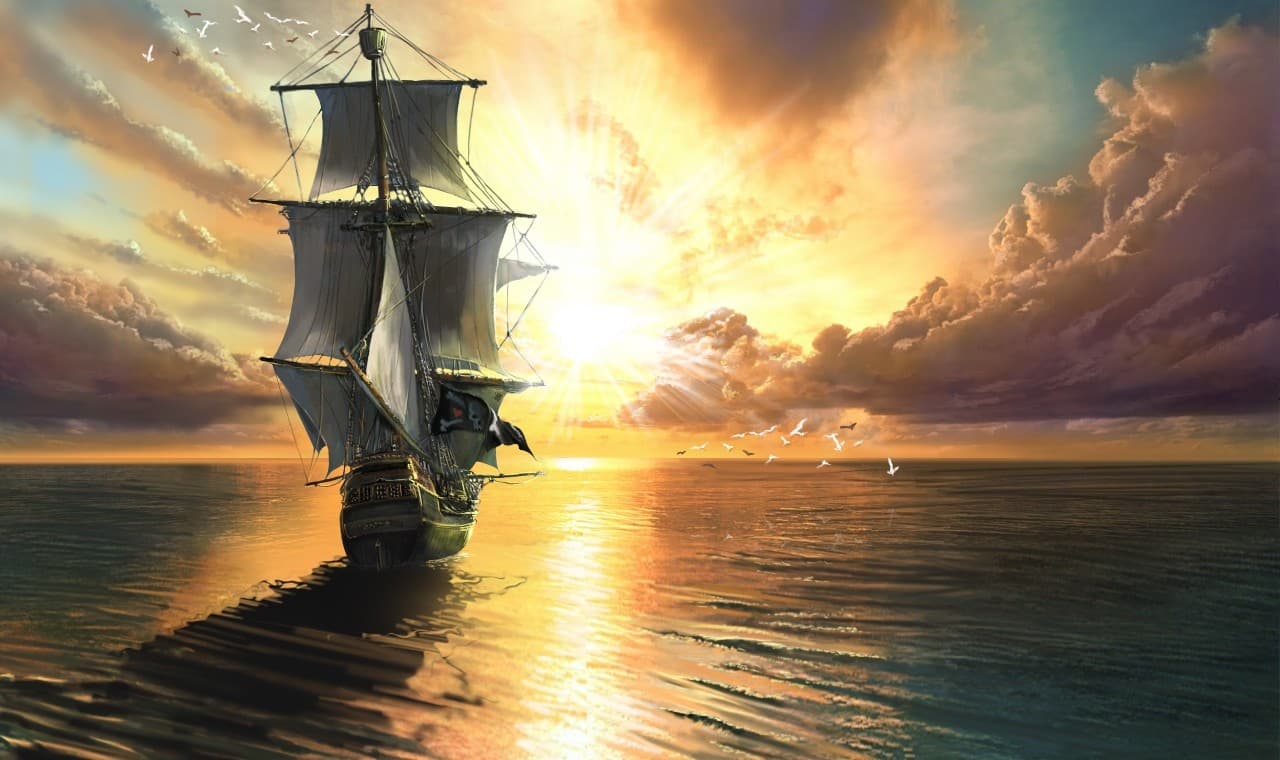
But humanity grew, and soon it will leave the "transitional age", and it will need to leave religion if it wants to move forward. Just as a teenager must leave the quiet maternal and paternal harbor and embark on their own journey full of dangers and adventures.
The choice remains with humanity and the individual: to keep rising, in which case roots will dig deeper into darkness—toward evil—, or to stay in the homeland harbor, where there is no silence or storms? And even if we set off from the paternal harbor, what will be our compass? And what wind will be favorable?
❇️ Nietzsche's Choice: Freedom and Fate ❇️
Nietzsche made his choice; he decided to leave the paternal harbor—religion. He even created a compass for himself, following his guiding star—the Übermensch. But seasickness is inevitable for those who sail far from the harbor. Yes, it is our loneliness, it is our seasickness. How many of those who set sail have been destroyed by this sickness?
❇️ Psychology: Remedy for Seasickness ❇️
Here is the news for all who set sail: the cure for seasickness—Psychology!
〰️〰️〰️〰️
#Übermensch #PsychologyAndFreedom #ReligionAndDevelopment
Sources:
- Friedrich Nietzsche The Gay Science («La gaya scienza») / Friedrich Nietzsche; translated from German by M. Kornevoy, S. Stepanova, V. Toporova. – St. Petersburg: Azbuka, Azbuka‑Atticus, 2017. – 352 pp. – (Azbuka Classic).
Questions about this article
01Why can faith be a stage of maturity that a person eventually needs to outgrow?
A religious tradition can be a first school of values and inner discipline. Maturity continues when a person leaves this “parental harbor,” accepts the risk of freedom, and takes responsibility for choosing a compass. Outgrowing faith means neither denying formative experience nor letting it remain responsible for one’s path.
02What awaits a person after leaving the religious “harbor”?
Ready-made bearings disappear, so freedom comes with loneliness, doubt, and “seasickness.” Nietzsche’s Übermensch serves as an image of a self-chosen direction, while psychology helps a person endure the transition without losing the self.