
Our Shared Mythologeme
“They seem to have been friends since childhood, pure Light and Darkness,
Like yin and yang, a cynic and a kind soul,
One fate between the two, like a pushmi-pullyu” (Oxxx🎶)
For now, though:
Part 1 ✍🏻
What does it actually mean to be a hero? A hero is not simply a muscular fighter. A hero dedicates a life to something important or gives it for other people. The universal “male path” has long been to slay dragons, claim treasure, and build temples. Even if today’s battles take place in offices, the only weapons are a stapler and hole punch, and the “Golden Fleece” comes home in grocery bags won in a queue, the deeper essence does not change.
But what is the woman’s path?
“A woman’s heroism and self-sacrifice consist in taking the role of wife, becoming one with her husband, descending with him into the underworld, and giving him eternal life. This motif sounds through the Great Story of the underground journey. Ishtar wants to return her husband Tammuz to the world of the living. It is the great myth of the Goddess who descended to the underworld to bring the gift of eternal life to herself and her husband. Ancient traditions rest on the image of woman’s calling not only as creator of the cosmos, but as savior within that cosmos” (1, p. 106📚).
“She becomes a savior… Such an act by a woman saves her as well” (1, p. 87📚).
🌟 Here is the universal path of woman: she is not only a source of physical life, but a muse who transforms the spirit (1, p. 104📚).
Penelope, Odysseus’s wife, waited for him for twenty years. He would have been less than Odysseus if he had returned, sat down on the shore—and found no Penelope there.
Consider the myth of Orpheus’s journey into the realm of Hades. He entered the underworld to bring his beloved wife Eurydice back to life after she died while fleeing a satyr. In the underworld, Orpheus asked its ruler Hades and his wife Persephone to release Eurydice. They agreed on one condition: Orpheus must not look back until he had reached the light. On the way he began to suspect that he had been deceived. He could not endure the doubt and looked at Eurydice following behind him, and so lost her forever (1, p. 266📚).
To leave the realm of Hades, Orpheus had to believe that Eurydice followed him and not look back.
Partners must believe that their relationship can lead both of them toward a better future. Each must believe in the other’s strength and that the Other can and wants to reach toward them in return. Only then can they leave their personal hell (paraphrased from Into the Darkest Places, p. 309📚).
The myth of Orpheus and Eurydice also confirms Saint-Exupéry’s brilliant observation:
“Love does not consist in gazing at each other, but in looking outward together in the same direction.” ❤
Looking together toward the way out of hell, believing that your partner walks with you, and refusing to look back at the fears forever circling in our minds—that is what this myth teaches. ⚠
But how can one believe? All early experience had said: they cannot be trusted. Sooner or later, they will leave.
He so often told her that she had to believe. Yet deep inside, he did not believe either.
He could not believe that he would not be abandoned as he had been in those early years. Trying to protect itself from the pain of loneliness, his perception began to form an internal working model.
“The mind, or ‘subjective life,’ can become an alternative to a parent on whom the child cannot rely; attachment to that inner life can, to some extent, protect a deeply traumatized psyche from intrusion” (2, p. 422📚).
👥 So he raised an Other inside himself, one who would never abandon him in difficult moments. Time passed; the inner Friend grew stronger, and the hero became less dependent on the external world.
“Not of this world, superfluous as ink without a pen,
As if someone dug out a seed or removed a link
From the chain where everyone is exemplary—to hell with them;
My connection to this world touches it only at a tangent.”
“Some children suffering from disorganization begin to suppress all needs connected with interpersonal relations and reject any close interaction” (2, p. 102📚).
And when a relationship does appear, it feels like a betrayal of one’s own self. ❗❗❗
“Renouncing ‘loyalty’ to the trauma is equivalent to renouncing an earlier child version of oneself” (2, p. 48📚).
“What you were once ready to die for may lose its importance tomorrow.”
Bang. It is like shooting the one—or the thing—that has always helped you.
He really did create a miniature world and believe
That Bucephalus was his steed and he was Lancelot.
Lancelot, faced with a choice between love and honor, sacrificed honor.
Lancelot, the Knight of the Cart
“Lancelot, the Knight of the Cart” 🔎
The title of this romance comes from a remarkable episode.
Guinevere has been abducted. Lancelot sets out to find her, drives his horse to exhaustion, and the horse dies. Wearing heavy armor, he walks alone from the city toward a dark, web-filled forest. He moves slowly when a cart passes. For a knight to ride in a plain peasant cart in full battle dress would be utterly dishonorable, because such carts carried criminals to execution. No knight would ever climb into one.
As the cart approaches, a thought occurs to him: in the cart he could find Guinevere more quickly—but what about his honor?
After taking three steps, he decides and climbs aboard. Thus he passes his first trial, choosing between honor and love.
Then:
“She is cold as ice.
Why?
Because before climbing into that cart, he first took three steps in doubt.”
At first, then, he had seemed to reject the thought of her—or rather, he first remained “loyal to his trauma”: his honor, his ego.
Another question is equally interesting: did she perceive honor—the ego, the inner Friend—as a rival with whom the Hero could betray her?
There is no smoke without fire. The “Wild,” primordial woman—her intuition—may whisper: something is wrong; he is betraying you with someone; he is not with you.
Meanwhile our Lancelot parts with his ego, his honor.
Oh, those three steps.
He and his Ego went through Hell
“You and I went through hell. Woodman’s psychic castings were always there. At the start they handed out scrolls with cheat codes for fate; some could never skim any cream from theirs. You looked at your own: nothing but chatter and feeble attempts to escape the all-consuming feminine principle…
In the end, you drank away your armor and married a laundress…
You are only here because I was inside you! Without me you would be hauling water for people, a sorry breed.
👥 I saved your life. When there was no one, I alone stayed with you.
👥 You needed me only while you were alone—and now you are with her?
👥 Pfft. Look at her. What will you achieve with her? She is no equal to you…
👥 Within you, I was everything: I grew from a rebellious drinking teenager into a solid Shadow. I took on the form of Psyche, invented the Prologue for you, gave you a tattoo, and helped you grow up. I am that tireless voice that kept saying: read, study—knowledge is the foundation of power over people.
👥 You raced with me across the fields; together we howled at the moon. You created me yourself. And now you will so brazenly put me to death?”
🏴🏳🏳🏴🏳🏴🏳🏴🏳🏴 (Author of the sketch: the Ego they want to kill)
Stop, stop, stop. These are only fears.
(To be continued)
Our Shared Mythologeme. Part 2 🍀
“The laws of love are cruel. If you give up something for a little of something else, then you give up everything for that little and carry this thought in your soul throughout the journey” (1, p. 269).
What a difficult trial this is. Honor—or ego—is what has always been with you, what you conceived and raised within yourself. It is a certain view of life. Transformation through love seems to proceed through destruction.
“The destruction of form makes it possible to create another form” (1, p. 230📚).
But that resembles death. You are used to this world, while the world with her is unknown. Will it even exist? How strong must faith be to believe that something waits beyond the horizon?
This is not merely a situational moment. It is an existential plot.
“Whoever wants to save his soul will lose it, but whoever loses it will find it” (Matthew 16:25).
Does leaving ego and honor behind for great love amount to an act of faith and strength? Or, as our culture often frames it, submission and a weak inner core?
“Will you cling to your past, or let the flame of today remelt you into something new?” (1, p. 278📚)
“Initiation is conducted by the temptress, who invites and leads the man into a world that violates all his familiar ideas and rules” (1, p. 187📚).
Jung’s relationship with his patient Sabina Spielrein is a vivid example. Jung abandoned analytic boundaries (Into the Darkest Places, p. 73📚). What did that mean?
She enlightens the man. That is the meaning of transformation. Here is a fragment of the legend of Thetis and Peleus:
“The serpent at his heel delivers a fatal bite to the Achilles tendon, after which his Ego dies… and a new song of this world begins to sound for him.”
How symbolic. The same serpent through which humanity learned Good and Evil now appears as a feminine transformative force and bites his Achilles heel. Yet this poison is useful only in measure. The ego must not be killed.
“Buddhists speak of the eight winds of karma. When they catch a person, they blow him into the realm of Ego consciousness. One must not get rid of the Ego—that is considered the greatest error in yogic practice. One must build a relationship with it” 🤝🏻 (1, p. 239📚).
The Ego must not be destroyed!
“Krystal (1978, p. 111) proposes limiting the term trauma to so-called ‘catastrophic traumas’ that cause the total destruction of the Ego structure, plunge the patient into complete helplessness and hopelessness, and ultimately produce a ‘catatonoid state’” (2, p. 62📚).
What does it mean to “build a relationship with one’s own Ego”? What does “building a relationship” mean at all? Clearly it concerns the ability to interact with an Other: to create a shared structure in which two or more independent particles interact as one whole while remaining themselves.
Ferenczi writes:
“Replacing the structure of one’s self with a new one is possible only through the partial or complete destruction of the existing structure. The new Ego is not formed directly from the old Ego, but from its fragments—the ‘elementary particles’ produced by disintegration, splitting, or atomization” (2, p. 364📚).
In other words, what is new inside us—and the new “cell of society,” the family—is formed from particles.
Yet to form a new Ego, one must pass through a half-life.
(Assemble the fractured self like a puzzle while sitting on Maslow’s pyramid.)
Then what is a personality building a relationship with the Other? What is the meaning of the myth of the Androgynes? That each of us is only half?
Particles… hmm… what about letters?
F followed M,
And that letter had more strokes,
Slanting, straight, vertical.
The horizontal was good,
And moving upward along the old vertical
It held more degrees of freedom…
But here is the dilemma: I still do not know the alphabet. Since childhood I despised letters, seeing them as the stronghold of flesh that concealed the spirit’s higher meaning.
I swore I would never learn them.
I thought they were only the dirt of ink,
That Mephistopheles bent them down to pluck that apple, and ever since all people have been forced to eat and devour them.
And the iron in apples must weigh upon souls so heavily that ferum would never let them fly… That is what I thought.
But I felt such joy!
Letters are the basis of words, and do they not say that the Word is God?
Or did God make letters from ribs as a joke, merely to avoid boredom?
There is certainly no boredom with them. What am I to do?
There are those like Woodman… vowels, consonants, stressed, hissing, upper- and lowercase…
Some sound only together with another, while some have meaning by themselves. That is what I seek: the letter that is an end in itself, not a means for others waiting to become an object, to become a word. Yet again a dilemma: there is only one such letter, and it is written “I.” The paradox is that this letter concerns me directly—we literally name ourselves with it. And Cyril or Methodius, or whoever stood at the beginning and knows but remains silent, placed it at the very end.
🧲🧲🧲🧲🧲🧲🧲
“His [her] distrust arose from early losses and the feeling that the Parent had abandoned him [her].
Trying to satisfy his desires, Adam often retreated into fantasy or watched pornography. These methods helped him exchange the submissive and vulnerable role familiar from childhood for a dominant position. He fantasized about completely controlling a vulnerable woman who needed him in order to satisfy his own sexual desires, believing such a relationship would finally give him control and meet all his needs…
He began to distance himself from his mother because she had long remained unavailable to him—literally absent from home. That is why Adam later maintained a detached stance in relationships. His attachment can be classified as insecure-resistant in childhood or dismissing in adulthood; his behavior is also a vivid example of destructive narcissism (Rosenfeld, 1987)” (2, p. 124📚).
How, then, can one change a position that was necessary for adaptation but ceased to be necessary over time? ❓❓❓
Of course there is no universal answer. A human being is unfathomable. Every personality finds its own, usually unconscious, ways to use its position.
What matters is the diversity of available ways.
Greece had an entire pantheon of gods and goddesses who conveyed “the mystery of our own soul, which can be understood through them” (1, p. 39).
“The god in whom a person dares to believe represents a choice of the forces that person considers primary in life” (1, p. 174📚).
✅ Determine what matters most in your life, then choose the corresponding Goddess.
“This is the essence of Paris’s choice: he had to choose the Goddess who would become his shakti, the energy reflecting the meaning of his life. For feminine forces in myths embody energies…” (1, p. 174📚).
• But there is a difficulty ‼‼‼‼
The Ego stirs at the bottom of consciousness like a hermit crab. The serpent’s poison will not harm it, but because it lives at the bottom in cold darkness, it knows neither the warmth nor the caress of women’s hands. It is afraid, retreats, and drags patriarchal prejudices behind it.
It is time to look into the darkest places ❗❗❗❗❗
I finished Into the Darkest Places and fell asleep. 💭💬
🌕💬 — First, Shadow, listen:
I did not betray you.
You are essentially like a Father to me.
I will only change you a little
So that the three of us can begin to live.
For Love is such a feeling…
Wait—do you even know that feeling?
🌑💬 — No. Where I come from, we were not taught such things.
🌕💬 — You will see: in love you too will be reborn; there will be room for the Id.
🌑💬 — Pah, plebeian stew! Eat from the common trough like everyone else? Is that what you want?
🌕💬 — No. I simply want to live my life so that those early settings stop dragging me around the same circle again and again.
🌑💬 — And what about power?
🌕💬 — Power is a trifle. Love holds the strength of all gods, and power is not needed there.
🌑💬 — What are you talking about now?
🌕💬 — You will understand, old friend. Tell me: why are you here?
🌑💬 — I am here only to make you stronger!
🌕💬 — Thank you, Shadow, for making me stronger. We discussed this back in 2017. Yes, you make me stronger, and I am grateful. But tell me: if not for me, what meaning would you have?
🌑💬 — I do not understand what you mean.
🌕💬 — If I did not exist, what would you do? Answer me, Shadow.
🌑💬 — Then I would not exist either. Without you, there is no point in my being here!
🌕💬 — Exactly. I knew you were clever and would say that word: meaning. What if I told you that She is the same kind of meaning to me that I am to You?
🌑💬 — That cannot be.
🌕💬 — It can, my friend. Thinking yesterday, I suddenly saw that all my—rather, our—struggles, longings, and work are filled with meaning only when we share them with others. You share your strength with me, correct?
🌑💬 — Yes.
🌕💬 — And that is the basis of your life?
🌑💬 — Yes.
🌕💬 — Then I share strength with her. In her development and growth I find meaning, and growth and development for myself as well. Just as you find meaning for yourself by sharing all this strength with me, I find meaning for myself by sharing strength with her.
🌑💬 — So you are her Shadow?
🌕💬 — No. This is the human world, and things work differently here. We are two fellow travelers in the minibus of Being…
🌑💬 — You will die in your “minibus of Being” and leave no legacy. Not without me.
🌕💬 — You are right and wrong at once, Shadow.
🌑💬 — Explain.
🌕💬 — You are wrong that we will leave no legacy. As Shakespeare said:
“Look how your beauty lives in your children,
Excusing the ravages of age.
Let blood grown cold with passing years
Burn once more within your heir” (Sonnet 2).
“Leave a son as youth is buried;
He will greet tomorrow’s sun” (Sonnet 7).
🌑💬 — You are going to have children???
🌕💬 — Yes. We are human, after all.
🌑💬 — Well… all right. But what did you mean by “right and wrong at once”? Where am I right?
🌕💬 — Without you I cannot leave my legacy. Just as I cannot without Her.
🌑💬 — Are you talking about conceiving children?
🌕💬 — Yes. I will need you during sex too.
🌑💬 — Ha-ha-ha, yes. You should have started with that. The Shadow gives its blessing!
🌕💬 — Thank you, Shadow, for helping me make my children!
🌑💬 — All right, enough. Our guest reading this nonsense will think you have come completely off your hinges.
🌕💬 — I do not care what our guest thinks, and I imagine you care even less. But “hinges” just struck me as a metaphor. The door is the gateway into a new, conscious life, and you—You and She—are the hinges that opened it.
🌑💬 — “We”? You place us in a tandem? Me, the Great and Terrible, and that Lady? What is the Lady’s name?
🌕💬 — I will not say.
🌑💬 — At least name a letter.
🌕💬 — First Zh, then K.
🌑💬 — What many-faced Janus is this? Have you joined a many-armed Shiva?
🌕💬 — I can feel you becoming jealous. If she sees this, she will think You are mocking her.
🌑💬 — She knows about Me?
🌕💬 — She senses that someone is there.
🌑💬 — How?
🌕💬 — Intuition is characteristic of Woman. But because she does not know the image of the archetype or internal working models, she keeps mistaking You for living people. She thinks I am always doing something with someone, sleeping with N, then D, then somebody else. In short, she has no feeling that I am faithful to her.
🌑💬 — Who am I? What did she call Me? I am the Shadow, mistress of every base vice, power, and revelry! I danced at the festivals of Dionysus and feasted with the Scandinavian gods in Valhalla.
In the form of a horse I carried Plato’s chariot into the distance. I nested in Nietzsche’s brain while Zarathustra was born.
I visited every genius, and if they yielded and bent to my charms, I turned them into madmen…
🌕💬 — I am explaining jealousy, and you keep talking about yourself. Oh, enough. I am tired.
Look out the window: above the field the Moon has become a semicircle. Shall we go howl at the moon as before?
(They leave.)
🌑💬 — Let us. I will go away, and that will be it. You cannot howl at the moon with her.
🌕💬 — Perhaps I can.
(They exit.)
Awakening
I vaguely remember some kind of dialogue, that I tried to come to an agreement with my Ego…
I open Psychology of Personality 🦋🦋🦋🦋🦋🦋.
Alexander Asmolov writes:
“The manifestations of personality’s activity do not arise from some initial push caused by one need or another. The ‘motor’ that begins personality’s activity must be sought in contradictions born within the stream of activity; they are the driving force of personality development” (3, p. 199📚).
“Lev Vygotsky believed that psychology is the science of producing diversity,” and then Asmolov says:
➡ “Crises are not temporary states, but the path of inner life” (A. G. Asmolov, Lecture 04, Cultural-Historical Sociology, 38:00–45:45 📺).
🗣 “To become a psychologist, one must live in different cultural worlds and in dialogue with those worlds” (1:08:00).
📢 There it is! Otherness is not a sentence but a gift ❗
“It is contradictions 🌓, and sometimes conflict between hierarchically related motives, that act as the mechanism of a special inner movement in individual consciousness. It consists in relating motives to one another: some take dominant positions, subordinating others and rising above them; some descend into subordinate positions or lose their meaning-making function altogether. The formation of this movement expresses the formation of a coherent system of personal meanings—the formation of personality” 🌈💫 (3, p. 360).
In brief, this can be expressed as:
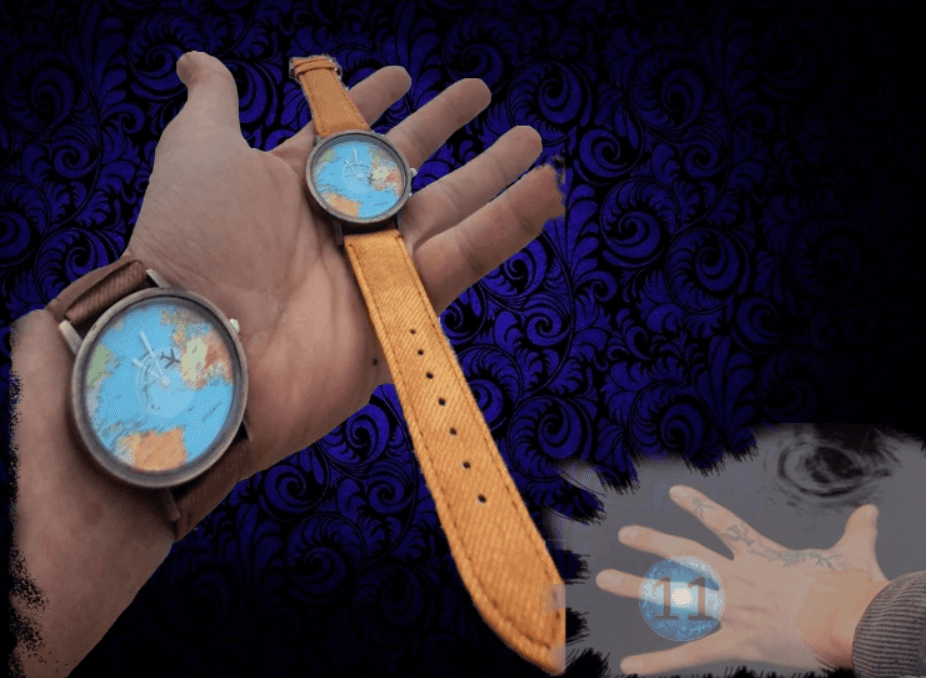
1+1=11
To bring it to life requires the Faith and Desire of Two Personalities,
and years of “interested activity in the development and life of the object of love” (Erich Fromm).
It may concern two conflicting positions within one personality: joined, they become more than their sum.
Or it may concern two people with different worlds who join to move through life and gain more than either had alone.
⚓ This is the general formula.
🌱 This is our shared mythologeme!
At least, I increasingly try to convince myself that:
After every pain ⬇, joy will come ⬆.
And each time my Shadow lets me value living people more deeply.
🧠 “The Ego is responsible for sober thought and ‘bland and dreary’ realism.
🕎 The unconscious is responsible for excitement, inflation, intuition, and creativity.
The unconscious produces
🌕 joy, admiration, pleasure, and unusual new ideas, but also
🌑 anxiety, fear, and horror. For normal functioning, we must accept and integrate 🦊 all its signals 🕎 into the structure of consciousness.
The activity of the human psyche is dynamic and continuous and requires the participation of both sides of personality” 🔄 (Into the Darkest Places, p. 435).
“In rites de passage, people are released from structure into communitas only to return to structure revitalized by the experience of communitas” (Victor Turner, The Ritual Process, p. 19).
🌓 “We were given darkness only so that we could greet the sun with joy” (Grot).
You were given a lonely childhood so that you could one day interact joyfully with others.
🕎 You study Psychology 🕎
🦊 So that you can give It to Her 🦊
🔄
References
- Goddesses: Mysteries of the Feminine Divine — Joseph Campbell.
- Into the Darkest Places — Marcus West.
- Psychology of Personality — Alexander Asmolov.
Questions about this article
01What is “our shared mythologeme” in this essay?
It is an image of mutual growth expressed by the formula “1+1=11”: two people, or two conflicting parts of the psyche, retain their differences yet create through trust, love, and dialogue a whole greater than a sum.
02Why is trust necessary for leaving a “personal hell”?
The myth of Orpheus and Eurydice portrays the need to move toward the light together without turning back toward fear of abandonment. In a relationship, that means trusting the other’s strength and a shared future.
03Must the ego be destroyed for love and transformation?
No. The essay distinguishes the destruction of an old form from the destruction of the ego: catastrophic disintegration brings helplessness, so the task is to relate to the ego and integrate its fragments anew.
04How do contradictions contribute to personality development?
Conflict between motives creates inner movement and a new system of meanings. Otherness and crisis can therefore become material for a more mature wholeness rather than a sentence.