
Suae quisque fortunae faber
“Each person is the maker of their own fortune”
The Latin motto is commonly translated this way. It is compelling because it restores the role of author: character need not be a blank fixed forever, and other people's expectations need not determine the entire future.
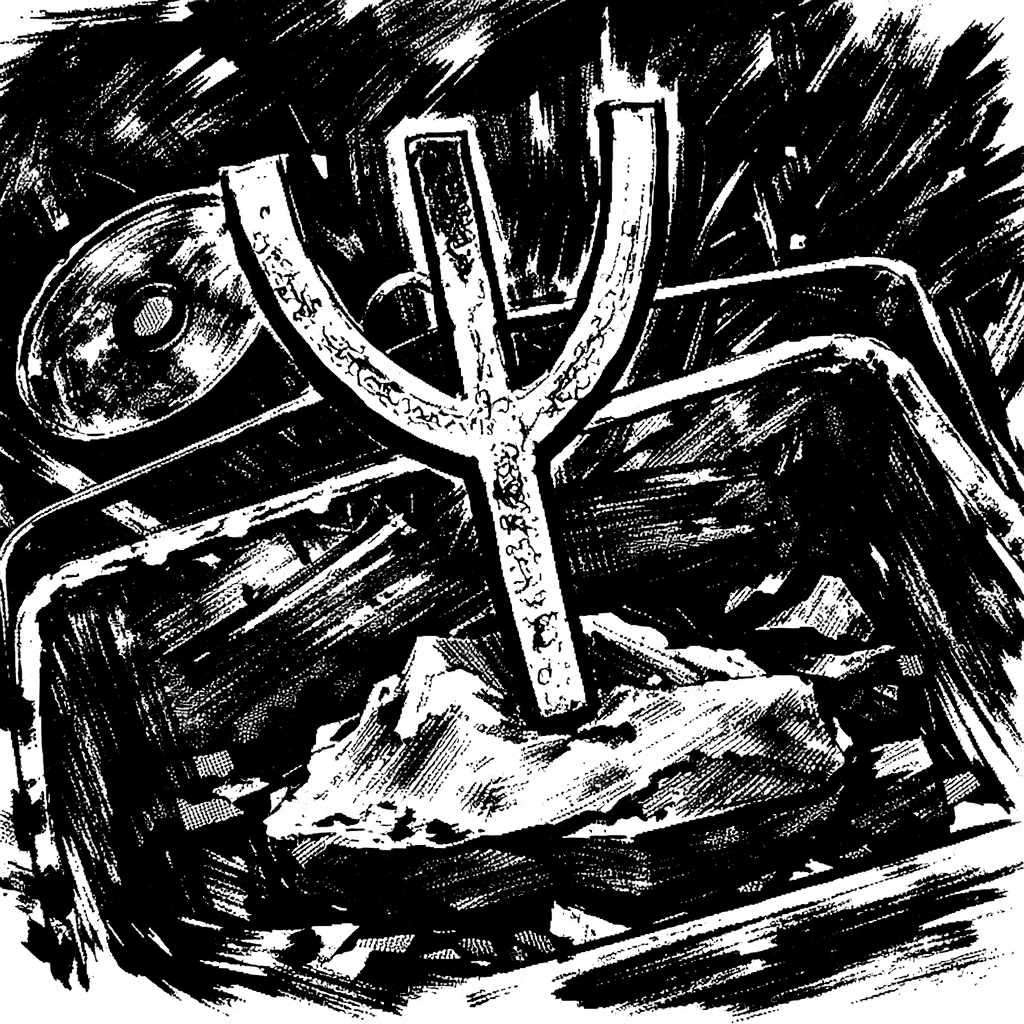
The forge metaphor works if we remember that craft consists of more than heat and blows. A smith selects material, learns its properties, maintains tools, controls temperature, lets a part cool, and refuses a movement that would destroy the workpiece. Pressure without knowledge of the material is not mastery.
What is genuinely within our influence
We can choose and revise many things:
- the values used to test a decision;
- skills built through practice;
- habits and environments that support them;
- people from whom we request feedback;
- boundaries we communicate;
- the next available step.
A trajectory does emerge from repeated actions. Character appears not only in grand declarations, but in how someone repeatedly answers small questions: continue, pause, ask for help, admit an error, or change the method.
Yet the motto becomes cruel when influence is treated as total control. No one chooses every starting condition, inherited vulnerability, illness, accident, economic crisis, discrimination, war, another person's decision, or chance. Agency means acting inside real constraints, not accepting blame for everything that happened.
Crisis is not a guaranteed forge of growth
The original version of this essay pictured crisis as a high temperature that softens the metal of the soul. The image has energy, but it also contains a dangerous error: the assumption that greater suffering reliably produces greater development.
Difficulty can teach. It can also exhaust, traumatize, and take away health, time, opportunity, or trust. Growth after adversity is possible, but it is not a duty imposed on the person who was hurt, and it does not justify the harm.
The American Psychological Association describes resilience as a process of adaptation, not innate invulnerability. Connection, care for well-being, realistic thinking, and meaning all matter. Seeking help is part of resilience rather than its opposite.
When a psychological “burn” appears, the answer is therefore not automatically to raise the temperature. Disrupted sleep, concentration, eating, daily functioning, or a persistent sense of threat are information about overload. NIMH recommends identifying stressors, supporting sleep and physical health, reaching out to trusted people, and seeking professional help when coping becomes difficult.
The form we choose
Values are less like a rigid mold for a molten person and more like a compass. They do not deliver a finished image of an ideal self, but help compare possible actions.
Role models and an imagined future can inspire. A borrowed image can also become a new cage when someone tries to reproduce another person's biography, body, pace, or measure of success. More useful questions are:
- Which quality matters to me now?
- What does it look like in observable behavior?
- Which cost am I willing to pay?
- Which cost destroys the point?
- What evidence would tell me to change the method?
“The Limits of the Possible” extends this question: a limit is not always a verdict, but not every wall becomes a door through determination alone.
Craft without self-immolation
Development can be organized as a workshop cycle:
- Choose a quality. Reliability, curiosity, or the capacity to say no.
- Name an action. Replace “become stronger” with “offer honest feedback once a week.”
- Set a modest load. A step should produce information, not prove one's right to exist.
- Gather feedback. From the result, the body, a trusted person, or a professional.
- Plan cooling. Sleep, rest, food, quiet, movement, and relationships belong to the process.
- Revise the form. A value can remain even when the method was wrong.
“Inner Inventory” examines the workshop's actual material: resources, debts, wishes, and constraints. “A Mindset for Overcoming” connects effort to the body and freedom, while the personal story about sport shows how practice can become support without promising universal rescue.
Choosing risk
The author's text “The Craft” expresses a willingness to take a risk even when others call the project impossible. The linked VK video preserves that artistic context. The long poem need not be repeated here; its central conflict is enough: another person's verdict versus one's right to try.
The right to try includes the right to stop. Psychological help is not an instruction to “love everything as it is.” It can help distinguish one's desire, social pressure, actual risk, and the price of change. Good help does not confiscate agency.
We do not create our fate entirely from materials of our own choosing. We do participate in shaping it—sometimes with a hammer, sometimes through measurement, sometimes by cooling the metal, and sometimes by deciding to stop forging what was never ours.
#PersonalAgency #Values #Resilience #Overcoming
Sources
- American Psychological Association. Building your resilience.
- National Institute of Mental Health. I'm So Stressed Out!.
- Anton Kolhonen. “The Craft”: VK video.
Questions about this article
01What does “each person is the maker of their own fortune” mean?
Constructively read, it reminds us that people can choose values, build skills, change habits, and make decisions. It does not imply total control over health, starting conditions, chance, structural constraints, or the actions of other people.
02Do crises automatically make people stronger?
No. Difficult experience can lead to learning and change, but also to trauma, exhaustion, or lost opportunities. Growth depends on safety, time, support, resources, and meaning—not on pressure alone.
03How can development avoid psychological burnout?
Choose a specific quality, connect it to observable action, increase the load in small steps, gather feedback, and plan recovery and stopping conditions in advance.